

(Listen while you read!)
Nick Drake lived from the 19th of June 1948 to the 25th of November 1974. In his 26 years of life, he released three studio albums and accumulated a large collection of home recordings. While Nick was alive he didn’t have much of an audience to speak of. Crippling depression and an inability to mentally perform a live show kept him from performing or touring.
The passing of Nick Drake went relatively unnoticed in 1974. The cause of his death was determined to be an overdose on anti-depressants, a presumed suicide. While his music was not appreciated during his lifetime, fortunately people are beginning to see his mastery and genius. At the time of this post, Nick Drake has over 1.3 million monthly listeners on Spotify, and his most popular song “Pink Moon” has 47 million listens.
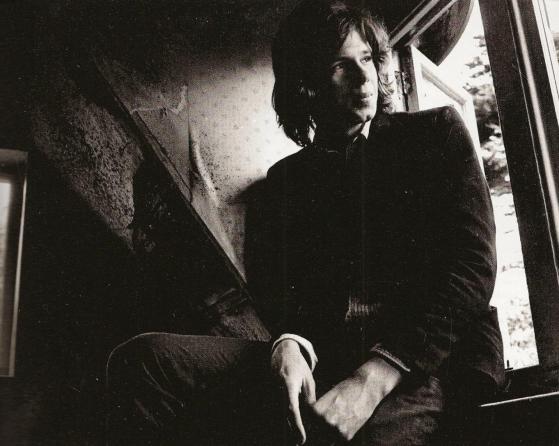
Nick Drake is a mysterious and curious man. There are no known video recordings of him playing, which adds to the intrigue of who he really was.
This blog will focus on Nick Drake’s first two studio albums, “Five Leaves Left” released in 1969, and “Bryter Layter” released in 1970. These two albums include not only Nick’s guitar and vocals, but arrangements including string and horn instruments. “Pink Moon” and his home recordings are just Nick and his guitar. No editing, no effects, no tricks, just a man at the helm of his guitar, a master at the peak of his ability.
That’s not to say that Nick’s first two albums are not as incredible as the rest of his work. Nick’s songs on these albums have incomprehensible depth and complexity. “Five Leaves Left” can only be described as a masterpiece of somber beauty, and “Bryter Layter” continues the story with a more upbeat tone. From my perspective, Nick Drake is the best acoustic guitar player of all time in terms of creation and technical ability. However, his ear for a complete orchestral arraignment is also unparalleled.
Nick plays with his guitar in various tunings, something that even the best guitar players struggle to do. Nick, however, can do it all with ease. He invented new ways to play the guitar, using chord shapes and picking patterns that were never before heard, and have yet to be replicated. Nick balanced the beauty of simplicity with the genius of complexity on these two albums.
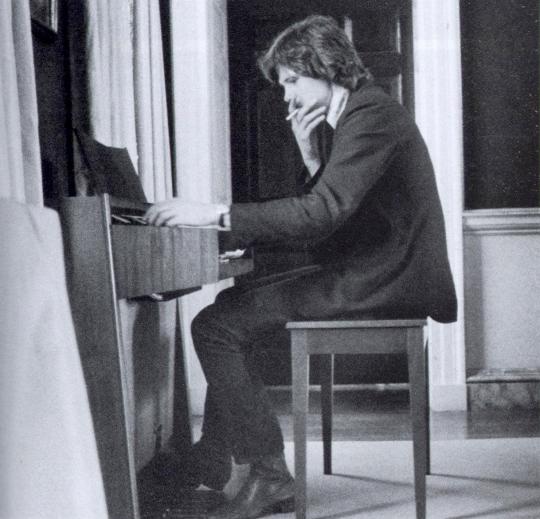
While I could go into detail about the use of counter-melodies, timbre, dissonance and resolution, and minor keys, I’ll keep it simple. Every choice that was made on this album was intentional, and all the pieces of each song compliment each other to build a complete and beautiful sound. These albums were recorded live in the studio, the whole band playing the whole song. This is almost unheard of in today’s music industry, but Nick swore by the practice. I think this is just another element that sets Nick’s music apart from all the others.
I can say with confidence that Nick Drake is my favorite musician of all time. His music has had the most profound impact on me and is one of the major factors that influences my own playing. I would love nothing more than for his music to get the recognition it truly deserves. While every song is truly a flawless work of art, here are my top picks from Nick Drake’s first two studio albums:
1. Riverman
This song is a culmination of all the essential Nick Drake characteristics. “Riverman” is composed in a 5/4 time signature as opposed to the traditional 4/4 signature. The use of string instruments on this song add to the somber and dark tones of Nick’s guitar and vocals. The song tells of a lost young girl, a tragedy filled with hope and unsatisfying resolution.
2. Man in a Shed
The technical ability required to play this song is unrivaled by many other songs in existence. “Man in a Shed” is played in a far from standard tuning and uses a right hand picking pattern that is nearly impossible to establish correctly, mentally or physically. Where on earth a 20 year old boy learned to compose a song with such lyrical depth and emotion is striking. We can only wonder what he would have gone on to create if not for his life being cut short.
Honorable mention: Introduction
The first song on “Bryter Layter” bridges the gap between the albums. Again, Nick plays in a non-standard tuning. The syncopated rhythm of the guitar paired with the elegant strings makes for deeply moving sound. If only this moment lasted for more than a mere minute, an allegory for Nick’s life.
3. At the Chime of a City Clock
Needless to say, this song is played in yet another unique tuning. This song is a roller coaster of power and fragility. The backing saxophone and bass give the song a jazzier feel than many of the other songs on this album. I believe “At the Chime of City Clock” is a commentary on the dogma and mindless oppression of the society Nick saw around him.
Here are some artists who I believe have a similar sound to Nick’s first two studio albums:
Jackson C. Frank: https://open.spotify.com/artist/5TNmizItgJPfvCoPKXAMGz
James Taylor: https://open.spotify.com/artist/0vn7UBvSQECKJm2817Yf1P
Drugdealer: https://open.spotify.com/artist/0tMnuEXTeJeHbslcV8OybJ
Either you will understand or you won’t. I hope this music does the same thing to you as it has done to me:
Spotify: https://open.spotify.com/artist/5c3GLXai8YOMid29ZEuR9y
Apple Music: https://itunes.apple.com/us/artist/nick-drake/1285818


 Unturned Tunes